
A traditional implant requires roughly 8–10mm of bone height and 5–6mm of width to integrate reliably. Bone begins shrinking within days of tooth loss and continues for years. Bone grafting adds new bone material to the deficient site; over 3–9 months the body integrates the graft into a stable foundation.
Book Now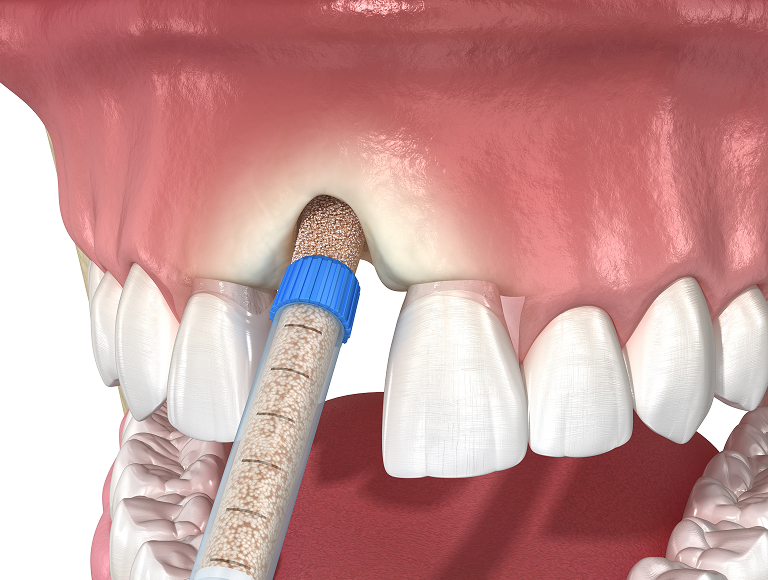
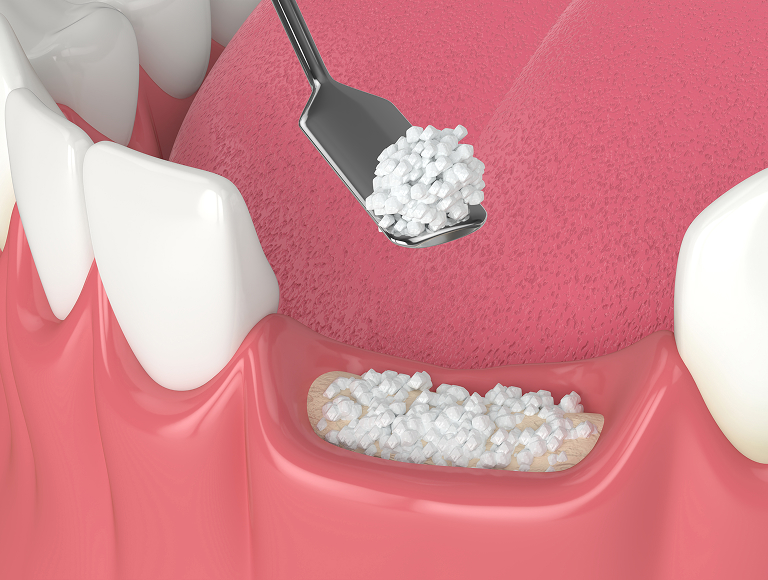
We use two types of graft material — allograft and autograft — both extensively studied and well documented for implant site preparation.
Allograft: Processed, sterilized bone from a certified tissue bank — the most commonly used option, extensively studied, with no second surgical site needed
Autograft: Your own bone, harvested from a nearby site — the patient's own living bone cells make it an excellent choice in select cases
Performed under local anesthesia or IV sedation. Day 1–3 is the period of most discomfort, controlled with prescription medication. By day 4–7, most patients eat soft foods and resume normal activity. The 3–9 month integration period is not painful — it's maturation time, not recovery time.
Book Now
Less than most patients expect — local anesthesia or IV sedation, prescription pain medication for 3–5 days, mild discomfort resolving within 1–2 weeks.
Many plans cover socket preservation grafts at time of extraction; larger procedures and sinus lifts may get partial coverage when documented as medically necessary.
In some cases — narrow-diameter implants and angled implant placement can make grafting unnecessary when there is enough native bone. Your CBCT scan tells us for certain.
Socket grafts: 3–4 months. Ridge augmentation: 4–6 months. Sinus lifts: 6–9 months. Confirmed via 3D imaging at follow-up.
Schedule a consultation at Tuscaloosa Dentures and Implants today.
Free Implant Consultation
Your consultation and 3D CBCT scan are completely free — so you know exactly where you stand before deciding anything.